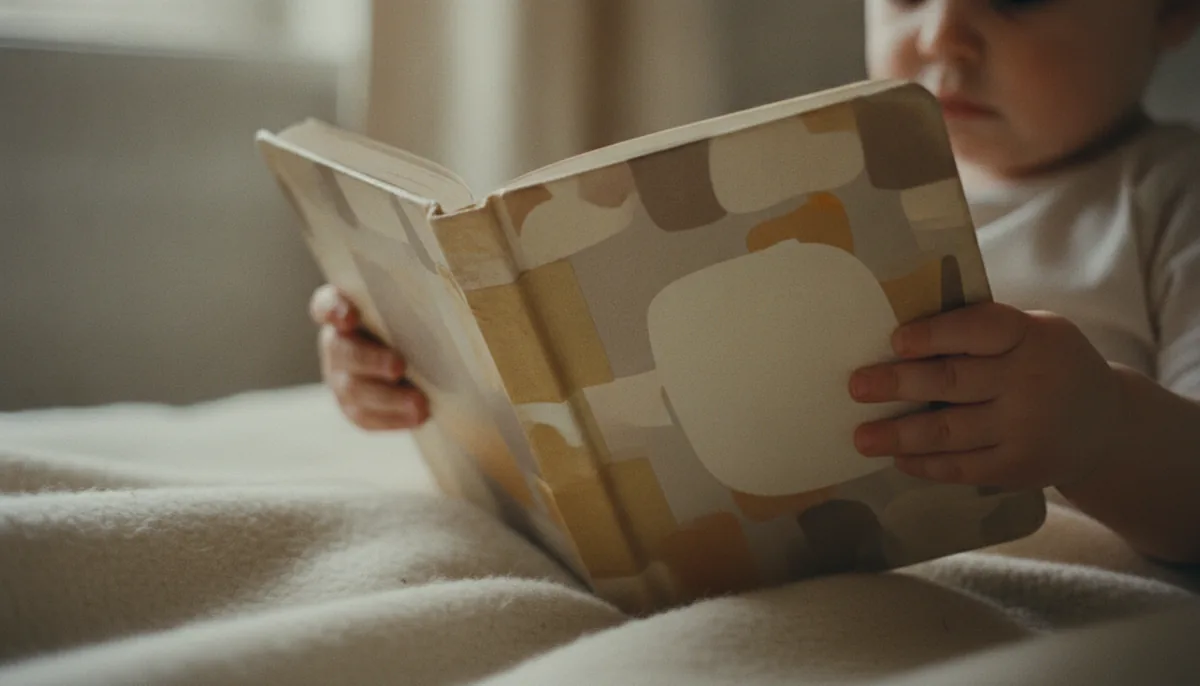
It is 7:40 in the evening. The child is washed, the light is low, and you are holding the book. Not a book. The book. The one with the taped spine and the bite mark on the corner, the one you could recite while asleep, because in a sense you have. You reach hopefully for something new from the shelf, and a small hand pushes it aside. A small voice says the word you knew was coming: “Again.”
Inside you, something deflates a little. Inside the child, something lights up. Both reactions are correct, and the difference between them is the whole story. You are about to repeat an experience. Your child is about to deepen one.
What repetition does for language
A new word does not stick after one meeting. Children need to encounter it again and again, in the same sentence, in the same voice, before it stops being noise and becomes theirs. A picture book read once is a plot. A picture book read ten times is a vocabulary.
You can watch this happen if you pay attention across the readings. On the first evening, the child follows the story and not much else: who is this, what happens, does it end well. By the fifth, they have started asking about the strange words. By the tenth, they are saying the strange words. By the fifteenth, they are finishing your sentences before you turn the page, correcting you sharply when you skip a line, and “reading” whole pages from memory with the book held the right way up. That is not a parlor trick. It is how reading begins.
None of this is available to a child who hears every book exactly once. A constantly rotating shelf gives them a parade of plots and ownership of nothing. The twentieth reading is not the wasteful one. The single reading is.
A child asking for the same book is not stuck. They are practicing, and they will stop on their own the moment the work is done.
Why predictability is the point
There is a second thing happening, and it has nothing to do with words. A small child controls almost nothing about their day. Meals appear and disappear, plans change, adults make decisions with reasons nobody explains. The favorite book is one of the few places where the world behaves.
The child knows the Gruffalo is coming. They know exactly when, on exactly which page, and they know the mouse will be fine. That certainty is not boredom to them; it is comfort, and at the end of a long day of being small in a big arbitrary world, it can be the most relaxing ten minutes they get. Knowing what comes next, and being right, every single time, is a quiet kind of power.
This is also why the demand for repetition peaks at bedtime, and why a calm, predictable book like The Going to Bed Book becomes a fixture rather than a phase. The book is not just a story at that hour. It is part of the architecture of falling asleep.
Why good books survive the twentieth reading
Here is the part that connects repetition to choosing books well: not every book survives it. Repetition is the most honest quality filter there is, far more honest than any award sticker. A thin book, one good joke and a moral, is empty by reading three and actively painful by reading nine. A good book gets richer.
Richer how? The verse in The Gruffalo still carries you on reading twenty, the way a good song survives repeat listening. The pictures keep paying out small discoveries: the background animal nobody noticed for two weeks, the detail that quietly foreshadows the ending. The child finds these things precisely because they already know the plot and have attention to spare. Knowing the story frees them to explore the book.
So when you stand in a shop wondering whether a book is worth it, this is the real question. Not “will my child like this tonight?” but “will either of us survive this in March?” We wrote a whole piece on testing a picture book in 90 seconds, and the repetition test is the heart of it.
When gentle rotation is fine
Almost never, honestly, and almost never by force. The phase ends on its own, usually sooner than you expect and sometimes overnight, and the book that was demanded for six straight weeks is suddenly just a book again. You will miss it slightly. This is normal.
But if the fortieth reading is genuinely wearing you down, there is a gentle way: add, do not subtract. Bring a second book to the sofa and read it alongside the favorite, before it, never instead of it. The ritual stays intact, the favorite keeps its throne, and the new book gets a fair audition on safe territory. Sometimes it catches. Sometimes it is rejected without trial. Either answer is fine.
What does not work is making the favorite disappear. Children notice, the way they notice everything you hoped they would not, and the message they receive is not “variety is fun” but “the reliable thing was taken away.” That is the opposite of what bedtime reading is for.
Survival tips for reading nineteen:
1. Let the child take over. Pause before the lines they know and let them say the words.
2. Hand over page-turning duty. It slows things down in the best way.
3. Vary your voices, not the text. New voices are allowed; skipped pages are a crime.
4. Autopilot is permitted. Your presence matters more than your enthusiasm.
5. Remind yourself: this is the book working, not failing.
So tonight, when the small hand pushes the new book aside and the small voice says “again,” you can sigh on the inside and say yes on the outside. You are not indulging a rut. You are funding a vocabulary, underwriting a sense of safety, and confirming that you chose the book well in the first place.
And if you are looking for a book that can take that kind of loving punishment, our Book Finder asks three questions and suggests books that have survived reading twenty at our place, spines taped and all.
Transparency: some links on this site are affiliate links, marked with *. If you buy through them, we earn a small commission at no extra cost to you. Book titles mentioned in the text are recommendations we stand behind, whether or not a link is attached.