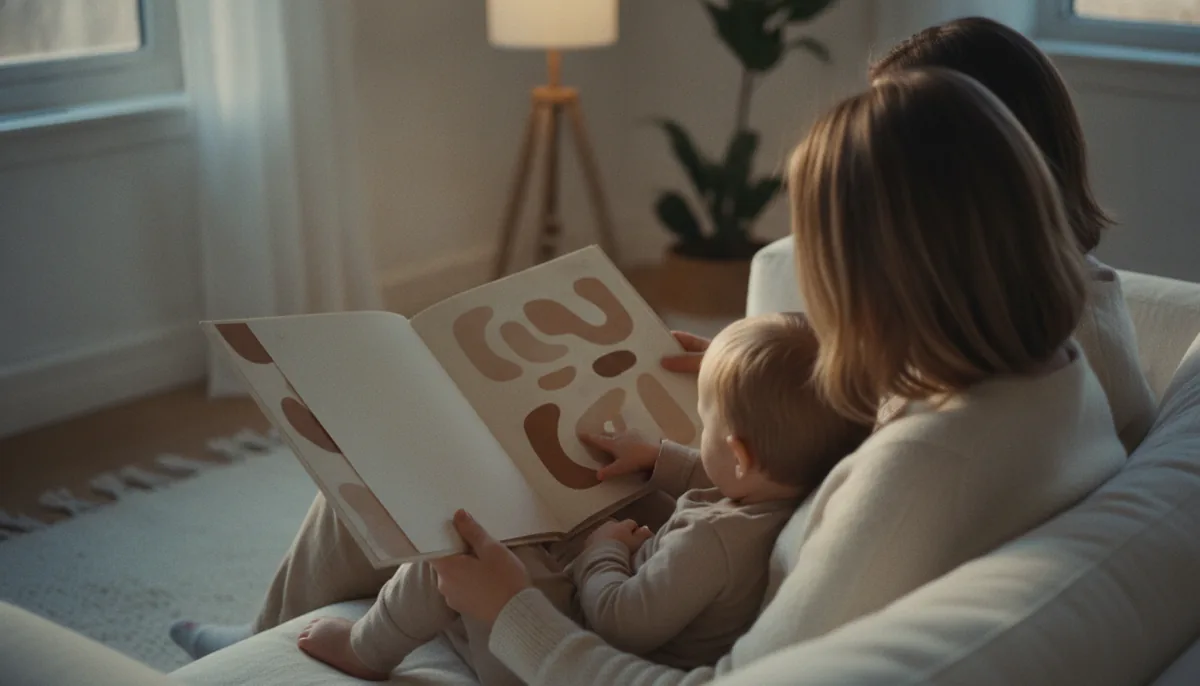
Here is a situation you know: you are standing in a bookshop, holding a picture book you have never heard of. The cover is charming. The blurb says it is "a heartwarming tale". The sticker says it won something. None of this tells you anything, because covers are designed by professionals, blurbs are written by the publisher, and stickers are printed by the million.
There is exactly one reliable way to judge a picture book, and you can do it right there in the shop.
Read two pages. Aloud. Quietly is fine.
A picture book is not a text. It is a script. It will be performed, by you, somewhere between fifty and two hundred times, usually at the end of a day when your reserves are gone. A text that only works when read silently is a bad picture book, no matter how lovely its message.
So open a spread somewhere in the middle, not the carefully polished first page, and read it half-aloud to yourself. Ninety seconds. You are listening for three things.
1. Does the language have a pulse?
Good picture book prose has rhythm even when it does not rhyme. Sentences breathe. There are short ones. And then there are longer ones that build up a little momentum before they land. When you stumble twice in two pages, it is not you. It is the text, and you will stumble in the same places at bedtime number forty.
Rhyme deserves a special warning: bad rhyme is worse than no rhyme. If the text twists word order into knots just to hit the rhyme ("said the bear, with greatest care, upon the stair"), put it back. Compare that with something like The Gruffalo, where the verse carries you instead of tripping you. That difference is the whole craft.
A picture book is a script for a performance with one very honest critic in the audience.
2. Do the pictures know something the text does not?
In a great picture book, the illustrations are not decoration. They run a second channel of story. The text says "Mom was not angry at all", and the picture shows a kitchen in ruins and a mother with a twitching eye. Children read this gap fluently, and it is where most of the laughs live.
The check is simple: look at a spread and cover the text. Can you still tell what is happening, what the characters feel, maybe even what the joke is? If the pictures only repeat what the words already said, a child has nothing to discover on reading number five. Books like Julián Is a Mermaid go furthest here, telling almost everything through image, which is exactly why children pore over them.
3. Would you survive reading this twenty times?
This is the criterion adults forget in the shop and remember at home. Children do not consume books, they inhabit them. The favorites get requested nightly for weeks. A book with one good joke is empty after two readings. A book with rhythm, picture-jokes and small background details keeps paying out.
Be honest with yourself: if the text already annoys you slightly in the shop, that feeling will not improve. It will compound, and one day you will hide the book behind the radiator, and your child will find it, because they always find it.
The 90-second checklist
In the shop, before you buy:
1. Open a middle spread, read it half-aloud. Stumble twice? Back on the shelf.
2. Cover the text. Do the pictures still tell a story?
3. Imagine reading number twenty. Smile or sigh?
4. Bonus: check whether the people in it look like the world your child actually lives in.
That is the entire method. It costs nothing, works without a phone, and after five or six books your judgment gets fast and surprisingly sharp. The award stickers can keep their opinions.
If you want a head start instead, our Book Finder asks three questions and suggests books that already passed this test at our place. Read aloud, several dozen times each, by people whose evening energy is as limited as yours.
Transparency: some links on this site are affiliate links, marked with *. If you buy through them, we earn a small commission at no extra cost to you. Book titles mentioned in the text are recommendations we stand behind, whether or not a link is attached.